
Caring for a potted tulip plant is simple once you understand how tulips naturally grow and bloom. The Spring Equinox is near and bulb plants in our Montreal studio are arriving! On that note, we’re ready to share our care guide for Potted Tulips. These cheerful spring flowers are actually hardy bulbs that follow a seasonal rhythm, blooming briefly before returning to dormancy.
Potted tulips are popular indoors because they bring a burst of colour at the end of winter. Their upright stems and elegant cup-shaped flowers feel like a clear signal that spring is close.
Although tulips are often treated as temporary indoor decorations, the bulbs can continue their life cycle outdoors if planted properly after flowering.
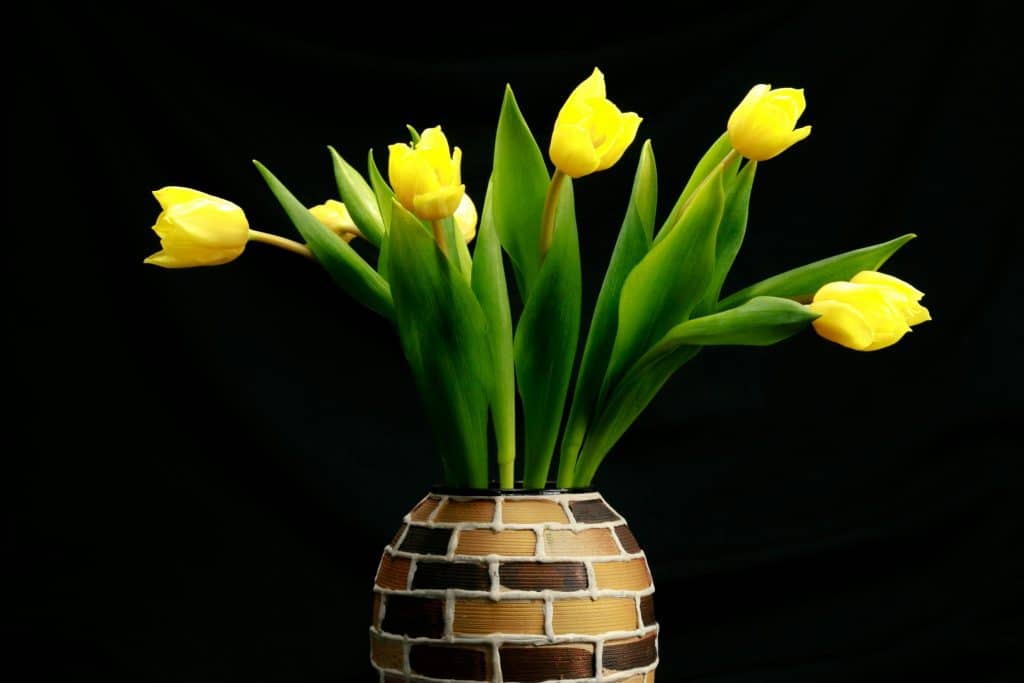
What This Plant Is (Quick Overview)
Botanical name: Tulipa
Plant type: Bulbous flowering plant
Native region: Central Asia and Turkey
Growth style: Spring-blooming bulb
Skill level: Easy
Tulips grow from underground bulbs that store energy through winter and produce flowers in spring.
This Guide Covers:
How to Care for Potted Tulip Plants
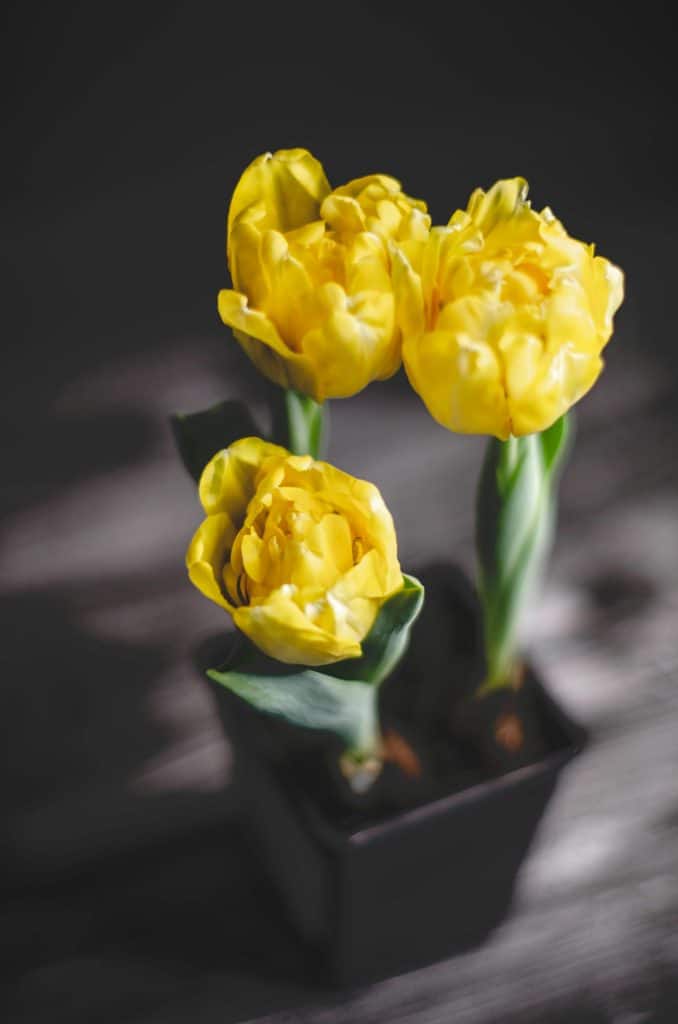
Light
Potted tulips prefer bright, indirect light.
A sunny window is ideal, but avoid placing the plant directly beside strong heat sources such as radiators.
If the light is too low, stems may stretch and lean toward the window.
Water
Water when the top of the soil begins to feel dry or gauge by weight.
The soil should stay lightly moist but never soggy. Signs of overwatering include:
- Soft or collapsing stems
- Moldy soil surface
- Bulbs beginning to rot
Signs the plant needs water include drooping stems and dry soil.
Always ensure excess water can drain from the pot.
Temperature
Tulips prefer cool indoor temperatures.
Ideal range:
10–18°C (50–65°F)
Warmer rooms may shorten the flowering period. Keeping the plant slightly cooler can help the blooms last longer.
Avoid placing tulips near heaters, fireplaces, and generally direct hot sunlight.
However, in my experience keeping potted tulips indoors in Montreal, Tulips often do fine in direct sunlight. Typically our cooler springs don’t over heat the plant. If you manage to find a potted tulip during the height of summer, morning sun will still be, but avoid afternoon sun.
Humidity
Normal indoor humidity works well for tulips.
They do not require misting and generally tolerate average household conditions without issue.
Soil
Tulips grow best in well-draining potting soil.
The pot must have drainage holes to prevent the bulb from sitting in water. Bulbs are very sensitive to prolonged moisture around the base.
Feeding
Fertilizer is not usually necessary for potted tulips while they are flowering.
The bulb already contains the nutrients needed to produce the bloom.
If you plan to plant the bulb in the garden later, feeding lightly after flowering can help replenish some energy.
A 10-10-10 balanced mix is best or a 10-15-10, slow release is recommended. If you want to better understand ratios and fertilisers, see our general guide for fertiliser ratios and feedings.
Troubleshooting Common Problems
Yellow Leaves
Leaves turning yellow after flowering are completely normal.
The plant is moving energy back into the bulb and preparing for dormancy.
Allow leaves to fade naturally before removing them.
Drooping Stems
This usually happens when:
- The plant is too warm
- The soil is too dry
- The stems are reaching toward light
Move the plant to a brighter, cooler location.
Brown Tips
Brown edges can appear if the plant is exposed to dry heat or drafts.
Keeping tulips away from heaters often solves the problem.
Bulb Rot
Bulb rot is caused by poor drainage or overwatering.
Prevent this by:
- Using pots with drainage holes
- Avoiding water pooling in saucers
- Watering only when the soil begins to dry
Planting Potted Tulips in the Garden
After a potted tulip plant finishes blooming, many gardeners wonder whether the bulb can be planted outdoors.
In many cases, the answer is yes, although the next bloom may take a year to appear.
Steps to follow:
- Allow the leaves to remain until they turn yellow.
- Stop watering once the foliage fades.
- Remove the bulb from the pot and allow it to dry.
- Plant it in the garden in autumn, about 15–20 cm deep.
Choose a location with:
- full sun
- well-draining soil
- protection from standing water
Not all forced indoor tulips rebloom reliably, but many will recover and flower again with time.
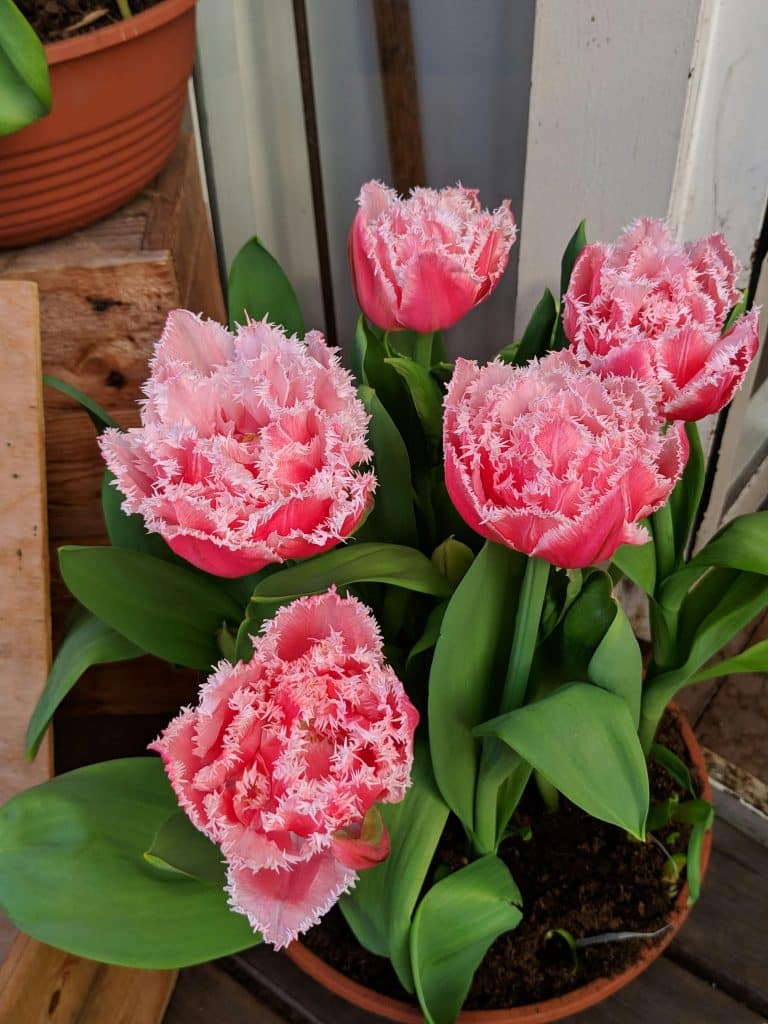
Regrowing Potted Tulips Indoors
If you would like to try growing tulips indoors again, the bulbs can sometimes be reused through a process called re-chilling.
After the leaves fade and the bulb has rested, tulips need a cold dormancy period before they can bloom again.
To attempt this:
- Allow the bulb to dry completely after the foliage dies back.
- Store the bulb in a cool, dry, dark location.
- In autumn, place the bulbs in a refrigerator for 10–14 weeks to simulate winter.
Keep the bulbs away from fruits such as apples, which release gases that can damage them.
After the chilling period, plant the bulbs again in fresh potting soil and place them in a cool bright area. Growth may be slower than the first time, but new flowers can sometimes develop.
Many commercially forced tulips will not rebloom as strongly indoors, but the process can still be worth trying.
How to Store Tulip Bulbs
If you plan to keep tulip bulbs for planting later, proper storage helps prevent rot and mold.
Follow these basic steps:
- Let bulbs dry completely after the foliage has died back
- Gently brush off excess soil
- Store bulbs in a paper bag, mesh bag, or cardboard box
- Keep them in a cool, dry, well-ventilated space
Ideal storage temperature:
10–15°C (50–60°F)
Avoid sealed plastic containers, which trap moisture and encourage mold.
When Tulips Are in Season
Tulips naturally bloom in early to mid-spring.
Garden tulips typically flower from April to May, depending on the climate.
However, potted tulips sold in shops during winter have usually been forced, meaning the bulbs were chilled artificially to bloom earlier indoors.
Symbolism & Meaning
Tulips are often associated with renewal, hope, and new beginnings.
Because they appear just as winter begins to fade, they have long been seen as symbols of spring’s return and the quiet persistence of life beneath the soil.
Fun Facts
- Tulips were once at the center of one of history’s most famous economic bubbles: Tulip Mania in the Netherlands during the 1600s.
- There are thousands of cultivated tulip varieties today.
- Tulips continue growing slightly even after being cut for a bouquet.
- Most tulips close at night and reopen with daylight.
FAQ — Potted Tulip Plant Care Questions
How often should I water a potted tulip plant?
Water when the top layer of soil begins to dry. The soil should stay lightly moist but never waterlogged.
Do potted tulips need direct sunlight?
Potted tulips prefer bright light but generally do best with indirect sunlight indoors generally speaking. But for cooler springs in regions like Montreal, direct sun will be more helpful then detrimental with the weaker light.
How long do potted tulips last indoors?
Blooms typically last 1–2 weeks, depending on temperature and light conditions.
Cool rooms help extend the flowering period.
Can a potted tulip plant grow outdoors?
Yes. After flowering, the bulb can often be planted in the garden in autumn, where it may eventually bloom again in spring.
When will Tulips and other bulb plants be arriving?
Our Montreal studio will have potted tulips available as of the Spring Equinox on May 20th, 2026. As well as: Hyacinths, Daffodils, Mascari, Irises, and Crocus

