Posted on Leave a comment

How to Care for Potted Tulip Plants

Caring for a potted tulip plant is simple once you understand how tulips naturally grow and bloom. The Spring Equinox is near and bulb plants in our Montreal studio are arriving! On that note, we’re ready to share our care guide for Potted Tulips. These cheerful spring flowers are actually hardy bulbs that follow a seasonal rhythm, blooming briefly before returning to dormancy.

Potted tulips are popular indoors because they bring a burst of colour at the end of winter. Their upright stems and elegant cup-shaped flowers feel like a clear signal that spring is close.

Although tulips are often treated as temporary indoor decorations, the bulbs can continue their life cycle outdoors if planted properly after flowering.


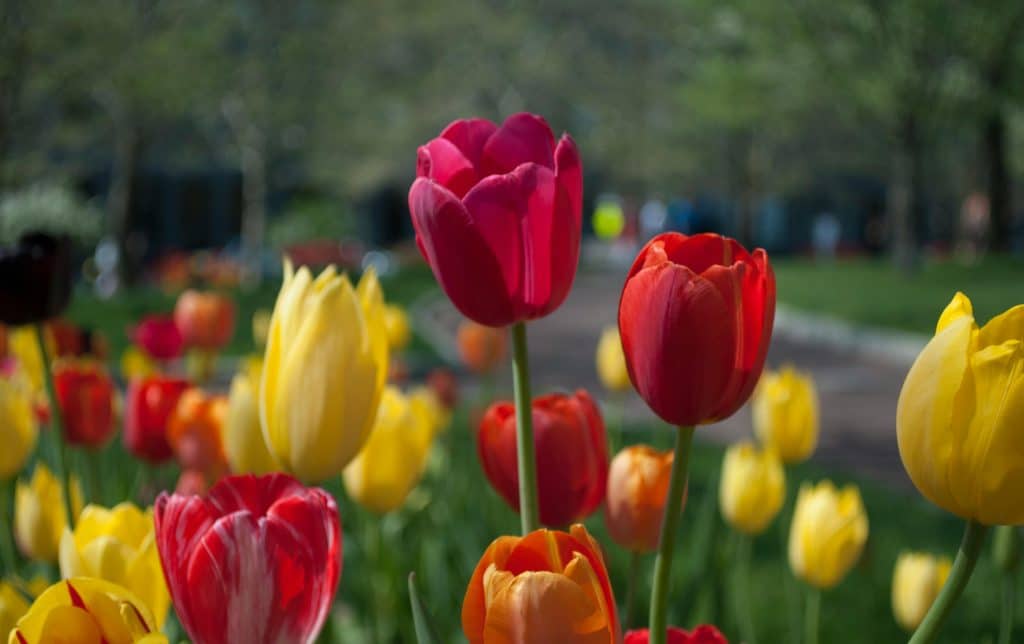
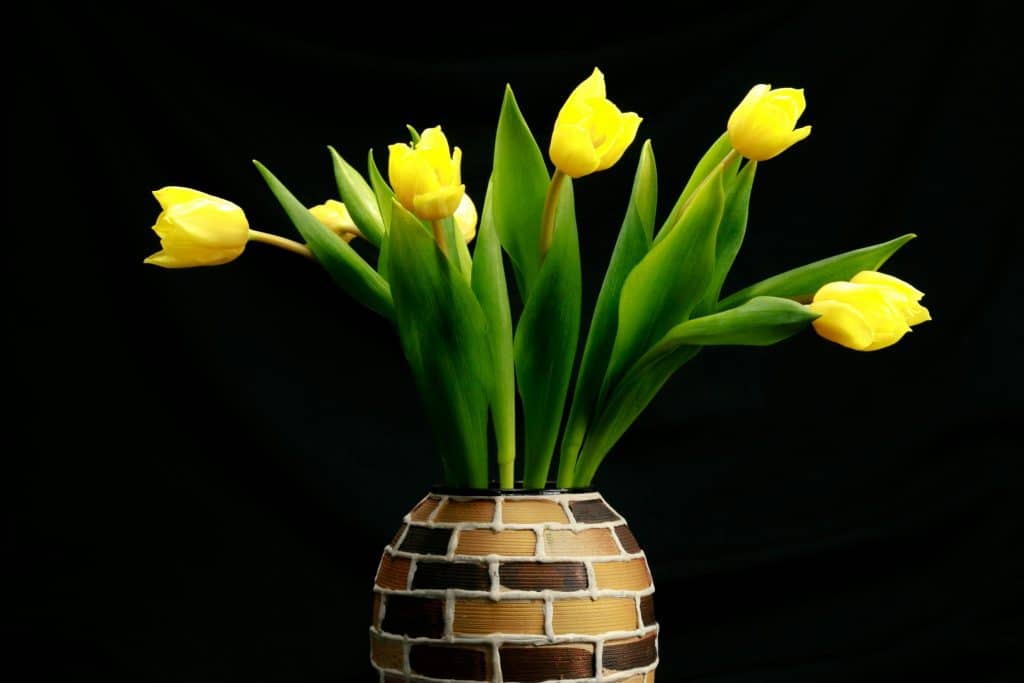
yellow potted tulips

What This Plant Is (Quick Overview)

Botanical name: Tulipa
Plant type: Bulbous flowering plant
Native region: Central Asia and Turkey
Growth style: Spring-blooming bulb
Skill level: Easy

Tulips grow from underground bulbs that store energy through winter and produce flowers in spring.


This Guide Covers:

How to Care for Potted Tulip Plants


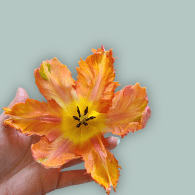
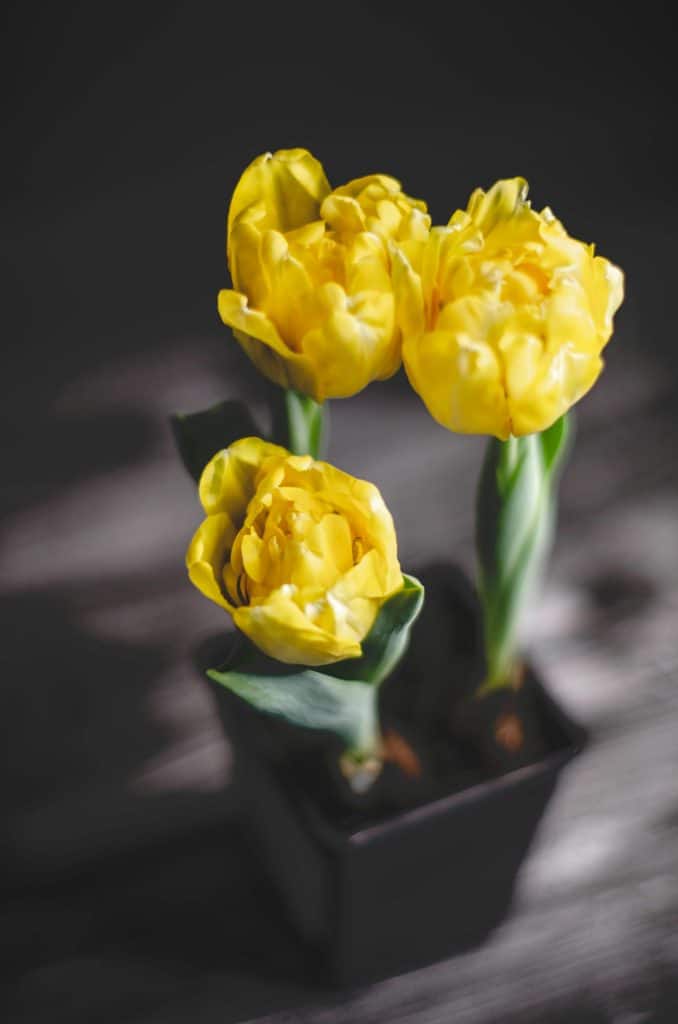
double earlies potted tulip plants in yellow

Light

Potted tulips prefer bright, indirect light.

A sunny window is ideal, but avoid placing the plant directly beside strong heat sources such as radiators.

If the light is too low, stems may stretch and lean toward the window.

Water

Water when the top of the soil begins to feel dry or gauge by weight.

The soil should stay lightly moist but never soggy. Signs of overwatering include:

  • Soft or collapsing stems
  • Moldy soil surface
  • Bulbs beginning to rot

Signs the plant needs water include drooping stems and dry soil.

Always ensure excess water can drain from the pot.


Temperature

Tulips prefer cool indoor temperatures.

Ideal range:

10–18°C (50–65°F)

Warmer rooms may shorten the flowering period. Keeping the plant slightly cooler can help the blooms last longer.

Avoid placing tulips near heaters, fireplaces, and generally direct hot sunlight.

However, in my experience keeping potted tulips indoors in Montreal, Tulips often do fine in direct sunlight. Typically our cooler springs don’t over heat the plant. If you manage to find a potted tulip during the height of summer, morning sun will still be, but avoid afternoon sun.


Humidity

Normal indoor humidity works well for tulips.

They do not require misting and generally tolerate average household conditions without issue.


Soil

Tulips grow best in well-draining potting soil.

The pot must have drainage holes to prevent the bulb from sitting in water. Bulbs are very sensitive to prolonged moisture around the base.


Feeding

Fertilizer is not usually necessary for potted tulips while they are flowering.

The bulb already contains the nutrients needed to produce the bloom.

If you plan to plant the bulb in the garden later, feeding lightly after flowering can help replenish some energy.

A 10-10-10 balanced mix is best or a 10-15-10, slow release is recommended. If you want to better understand ratios and fertilisers, see our general guide for fertiliser ratios and feedings.


Troubleshooting Common Problems

Yellow Leaves

Leaves turning yellow after flowering are completely normal.

The plant is moving energy back into the bulb and preparing for dormancy.

Allow leaves to fade naturally before removing them.


Drooping Stems

This usually happens when:

  • The plant is too warm
  • The soil is too dry
  • The stems are reaching toward light

Move the plant to a brighter, cooler location.


Brown Tips

Brown edges can appear if the plant is exposed to dry heat or drafts.

Keeping tulips away from heaters often solves the problem.


Bulb Rot

Bulb rot is caused by poor drainage or overwatering.

Prevent this by:

  • Using pots with drainage holes
  • Avoiding water pooling in saucers
  • Watering only when the soil begins to dry

Planting Potted Tulips in the Garden

After a potted tulip plant finishes blooming, many gardeners wonder whether the bulb can be planted outdoors.

In many cases, the answer is yes, although the next bloom may take a year to appear.

Steps to follow:

  1. Allow the leaves to remain until they turn yellow.
  2. Stop watering once the foliage fades.
  3. Remove the bulb from the pot and allow it to dry.
  4. Plant it in the garden in autumn, about 15–20 cm deep.

Choose a location with:

  • full sun
  • well-draining soil
  • protection from standing water

Not all forced indoor tulips rebloom reliably, but many will recover and flower again with time.


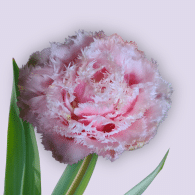
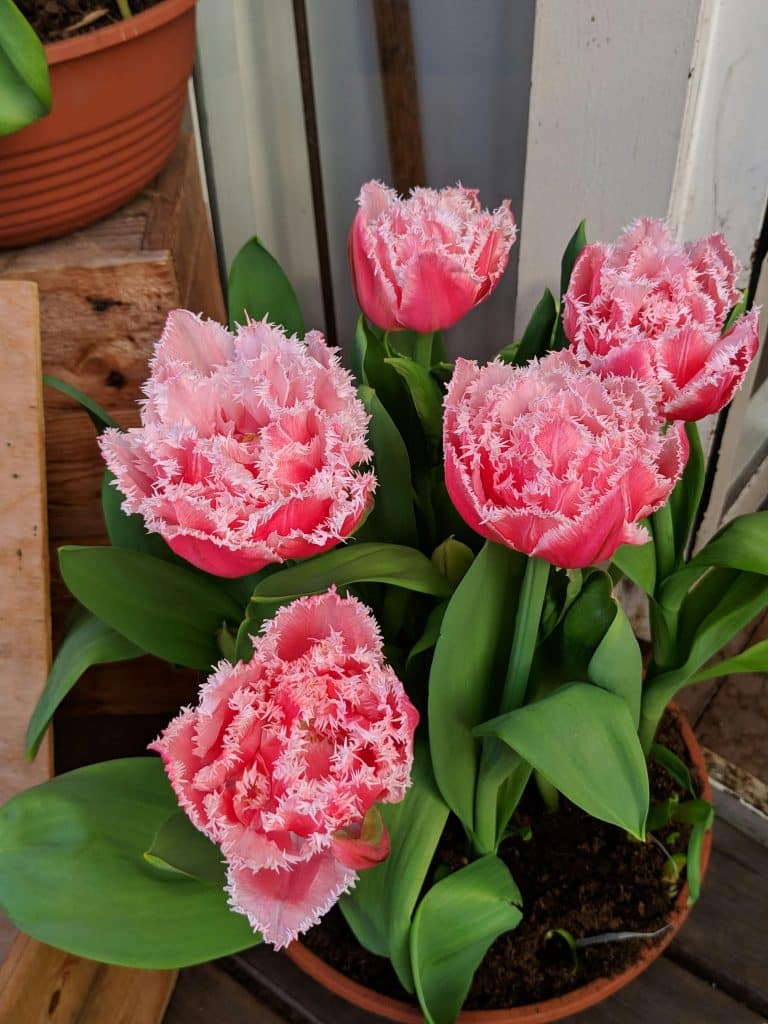
double frilly pink tulip plant

Regrowing Potted Tulips Indoors

If you would like to try growing tulips indoors again, the bulbs can sometimes be reused through a process called re-chilling.

After the leaves fade and the bulb has rested, tulips need a cold dormancy period before they can bloom again.

To attempt this:

  1. Allow the bulb to dry completely after the foliage dies back.
  2. Store the bulb in a cool, dry, dark location.
  3. In autumn, place the bulbs in a refrigerator for 10–14 weeks to simulate winter.

Keep the bulbs away from fruits such as apples, which release gases that can damage them.

After the chilling period, plant the bulbs again in fresh potting soil and place them in a cool bright area. Growth may be slower than the first time, but new flowers can sometimes develop.

Many commercially forced tulips will not rebloom as strongly indoors, but the process can still be worth trying.


How to Store Tulip Bulbs

If you plan to keep tulip bulbs for planting later, proper storage helps prevent rot and mold.

Follow these basic steps:

  • Let bulbs dry completely after the foliage has died back
  • Gently brush off excess soil
  • Store bulbs in a paper bag, mesh bag, or cardboard box
  • Keep them in a cool, dry, well-ventilated space

Ideal storage temperature:

10–15°C (50–60°F)

Avoid sealed plastic containers, which trap moisture and encourage mold.


When Tulips Are in Season

Tulips naturally bloom in early to mid-spring.

Garden tulips typically flower from April to May, depending on the climate.

However, potted tulips sold in shops during winter have usually been forced, meaning the bulbs were chilled artificially to bloom earlier indoors.


Symbolism & Meaning

Tulips are often associated with renewal, hope, and new beginnings.

Because they appear just as winter begins to fade, they have long been seen as symbols of spring’s return and the quiet persistence of life beneath the soil.


Fun Facts

  • Tulips were once at the center of one of history’s most famous economic bubbles: Tulip Mania in the Netherlands during the 1600s.
  • There are thousands of cultivated tulip varieties today.
  • Tulips continue growing slightly even after being cut for a bouquet.
  • Most tulips close at night and reopen with daylight.

FAQ — Potted Tulip Plant Care Questions

How often should I water a potted tulip plant?

Water when the top layer of soil begins to dry. The soil should stay lightly moist but never waterlogged.


Do potted tulips need direct sunlight?

Potted tulips prefer bright light but generally do best with indirect sunlight indoors generally speaking. But for cooler springs in regions like Montreal, direct sun will be more helpful then detrimental with the weaker light.


How long do potted tulips last indoors?

Blooms typically last 1–2 weeks, depending on temperature and light conditions.

Cool rooms help extend the flowering period.


Can a potted tulip plant grow outdoors?

Yes. After flowering, the bulb can often be planted in the garden in autumn, where it may eventually bloom again in spring.


When will Tulips and other bulb plants be arriving?

Our Montreal studio will have potted tulips available as of the Spring Equinox on May 20th, 2026. As well as: Hyacinths, Daffodils, Mascari, Irises, and Crocus

Posted on Leave a comment

Poinsettia Care: How to Keep This Holiday Classic Thriving

This article by Fleuriste Atropa Belladonna, a Montreal florist, explains the basics of Poinsettia Care and how to keep this classic thriving for the Holidays, and includes light, temperature, watering, humidity, etc.

The poinsettia may be the unofficial flower of winter, but beneath its festive glow is a warm-weather beauty from Mexico that simply wants one thing: steady comfort. Treat it kindly, keep its roots just right, and this Euphorbia will reward you with brilliant colour all season long. Here’s how to keep yours happy with a few simple steps.

How to Care for a Poinsettia

1. Light: Bright, Indirect & Consistent

Poinsettias keep their colour best with plenty of bright, indirect light. A spot near a window (without drafts) helps the bracts stay vibrant longer.

  • Avoid dark corners — low light encourages leaf drop.
  • Direct harsh sun isn’t ideal either; choose filtered light; unless if you’re a fellow Montrealer, you can probably get away with direct sun, in my experience the sun is weak enough up here at this time of year.

2. Temperature: 15–21°C (60–70°F)

Poinsettias love stable temperatures.

  • Keep them in the 15–21°C (60-70°F) sweet spot.
  • Avoid cold drafts, open doors, and heat vents — they’re sensitive.
  • Never buy a plant displayed outside in winter; it may already be cold-damaged.
  • Always ensure the plant is well wrapped during transport, especially in Montréal winters.

3. Watering: Moist, Not Soggy

This is the part most people get wrong.

  • Keep the compost moderately moist.
  • Do not let it fully dry out — they dislike drought.
  • Do not let it sit in water — they dislike soggy roots even more.
  • Remove decorative foil when watering so excess water can escape.

Pro tip:
Use our weight trick

Lift the pot before and after watering to learn its “light” and “heavy” states. This becomes the easiest way to know when your poinsettia truly needs water.


4. Humidity: Higher Is Better

As a tropical species, poinsettias appreciate moist air.

  • A nearby humidifier or a pebble tray works well.
  • Avoid placing the plant close to radiators or fireplaces.

5. Final Checks

Leaf Drop

Usually caused by:

  • Overwatering
  • The room being too cold
  • Insufficient light

Crispy Leaves or Colour Fading

  • Too dry, too hot, or drafts
  • Check humidity, watering, and location

Droopy Appearance

  • Soil got too dry at some point
  • Water thoroughly once, then monitor with the weight method

Where Poinsettias Come From

  • Origin: Mexico
  • Botanical Genus: Euphorbia
  • Related to many succulent-like species and known for its colourful bracts rather than petals.

Final Notes

Keep it warm, keep it bright, keep it consistently hydrated, and your poinsettia will glow beautifully through the holidays. With steady care, many people even keep theirs into spring and summer.

Further Reading:
For growers, researchers, or anyone curious about how professionals manage poinsettia health, Purdue plant pathologist Dr. Janna Beckerman offers a deeper look at poinsettia protection and root health in this GPN article. Likewise, if you want a deeper look at the Holiday, read our overview on Christmas plants and traditions. Lastly, if you’re also looking for Cyclamen tips, another common Holiday gift, read about Cyclamen plant care.

Posted on Leave a comment

How to Care for Peace Lily

This article by Fleuriste Atropa Belladonna, a Montreal florist, explains how to care for Peace Lily (spathiphyllum), from soil and fertiliser, to light and watering, humidity and troubleshooting.

Spathyphillum / Peace Lily photo by alyssa polaris via pexels: Confident Watering: A Simple Trick I Use on My Plants
Photo by Alyssa Polaris

Spathiphyllum, Also Known as Peace lily, Spathe, and White Sail

A beautiful plant native to the tropical areas of the Americas as well as Southern Asia. It is one of the recommended indoor plants, by NASA, for air purification; why? Because it’s better at breaking down and neutralising toxic gases like benzene, formaldehyde, and carbon monoxide. This is not to say that other plant’s don’t purify the air or give us oxygen, these are simply more efficient. Plant choice is always dependant on your living/office space.

Soil

Soil requirements: All purpose or tropical mix soil. It’s always preferably to be planted in a pot that drains. If you’re displaying it in a non-drain decorative pot, not worries, just keep the plant in it’s planter pot, so that you can get rid of any water that drains into the decorative one.

Fertiliser

A balanced fertilizer is ideal, such as a 5-5-5 or 10-10-10. Peace lilies don’t require a lot of feeding, how much will depend on the kind of fertilizer you are using; but if it is water soluble feeding it once every three months should be fine, where as slow release fertilizers can be applied less often, twice a year during fall and Spring

Sun/Lighting

Bright indirect light, here in Montreal they can take the morning sunlight (anything that hits them before 11am).

Watering

It’s important to keep the soil is ideally kept moist, but not soaking. Water your plant when the soil is somewhat moist (or a medium to light weight), you should feel your plant become heavy. Don’t water if it is wet, saturated, and heavy. I recommend watering your plant over a sink and allowing the water to freely drain away. Never keep you plants sitting in water, though peace lilies are one of the more forgiving plants when it comes to this, it can cause root rot! Add water until it begins to run out of the drain wholes, let it drip dry before replacing it it’s deco. pot or tray.

Humidity & Temperature

Typically Peace lilies prefer not to go below 21 degrees Celsius. They enjoy humidity, so if you can lightly mist them once every few days they will do well. If conditions are already humid, this is not recommended as if can cause molding.

Dead leaves & Flowers

You can trim away yellow or brown leaves. As for browned flowers, you can cut them near where they exit the leaf, the flower stem that is left will eventually dry up all the way down to the base, and you will eventually be able pull it loose from the leaf, but this may take several days or weeks.

Drooping / Yellowing Leaves

Don’t panic, and don’t act before you access the situation. Drooping leaves are probably an indication that your plant is under watered; if you pick it up and it’s very light, you have confirmation, go water your plant!

After being underwatered, some leaves may turn Yellow! Has your plant been under watered lately? Yes, then it’s just natural, and there’s nothing more to do. Do not run to water it again, because likewise yellow leave can be… from over watering! If your plant did not go through a drought, check, is it heavy? Is it drowning in water? Well it’s time to drain the pot – if its been like that for a while, you may have to change the soil.

Dogs & Cats

Spathiphyllum is toxic to both.

Nasa Study

The study with the complete list of recommended plants can be view here as PDF

Likewise, Nasa’s overview of the findings can be found here

Posted on Leave a comment

How to Care for Snake Plant

Sansevieria | Snake Plant

How to care for Snake plants by Fleuriste Atropa Belladonna, a Montreal florist. We explain sansevieria’s survival needs including: light, watering, soil and pet-safety tips.

Also Known as Mother-in-Law’s Tongue, Saint-George’s Sword, Devil’s Tongue, Jinn’s Tongue, ad More.

There is no shortage of common names for this succulent. It is among one of the recommended indoor plants, by NASA study in which you can find all the listed plants; likewise they give a brief overview of their findings in this article: Interior Landscape Plants for Indoor Air Pollution Abatement. It ‘s particularly good at purifying air from toxins such as formaldehyde, xylene, toluene, and nitrogen oxides. Another neat fact is that this plant creates oxygen at nighttime instead of during the day; for this reason some like to place these in their bedroom.

Soil

Though some note that these plants can handle tropical soil, and even less water, it is not ideal for the plants. It is important that they should be in well drained soil, a cactus/succulent is best.

Fertiliser

You can fertilize using a balanced fertilizer such as 20-20-20 once in the spring and once in the summer, or with a weaker mix such as 5-5-5 once a month through out the spring/summer during the growing season.

Sun/Lighting

They will thrive in moderate to bright indirect light. However in my Montreal experience, my snake plants are in full direct sun in my south facing window at the height of the afternoon. I mention Montreal, because we are further north, this may not be suitable for places closer to the equator. They can survive in low natural light, or artificial light, but they won’t be thriving.

Watering

Soil should be allowed to dry between watering, this goes doubly when experiencing low light conditions. They also require less water during the winter. When watered, you should put enough to run out from the bottom, and then spill the excess.

Cats & Dogs

toxic to both

Posted on Leave a comment

How Do I Care for My Cyclamen? | A Simple Plant Guide

This article by Fleuriste Atropa Belladonna, a Montreal florist, explains how to care for Cyclamen, from light and temperature, to water and soil. Enjoy these plants that are native to the Mediterranean and North Africa by following our bonus tips.

How Do I Care for My Cyclamen?

We rank this plant care level: Average

How Do I Care for My Cyclamen? | A Simple Plant Guide. Featuring rows and rows of these beautiful plants, in red, pink, white, and purple!
Photo by Jilly Noble
@jillyjillystudio

These beautiful plants come from the Mediterranean & North Africa. Fun fact: Cyclamen flower centers actually face down, their petals opening upward as they bloom. Making it a sweet scene, if you have these on your patio; the little bees actually fly in upside down to pollinate. There are a few different varieties of this stunning plant, and thanks to it’s interesting foliage, you’ll find it is enjoyable even when it’s not blooming. If you’re wondering, how do I care for my potted cyclamen? We’ve got you covered with some simple steps below.

Cyclamen Basics for Best Results:

  1. Light: Place your cyclamen in a nice spot that gets some natural light from a window. You don’t want them to be in full sun as this is too hot for them and can burn the plant. They will be happy to be in the shade for the better part of the day, but will need some filtered light to continue flowering.
    Bonus: If you’re in Montreal, our North positioning help us. The sun isn’t too intense if you’re exposing your plant to a couple of hours of morning sunlight. They do very well on my North East facing balcony. Don’t forget, your phone has a compass if you’re not sure where your window or outdoor space is facing.
  2. Temperature: Keep your cyclamen positioned out of drafts, heat from fireplaces, heaters, and air conditioning. It prefers a more temperate area that is dry and away from moisture. Bathrooms are not an appropriate room for a cyclamen as the air is too humid. We would also advise against a very hot room, where the plant is subject to frequent changes in temperature.
  3. Water: Water your cyclamen once every week, and less frequently in Winter (roughly every ten days). It should stay moist but not wet. If the flowers are looking a little droopy, it’s good indication of when they are feeling a bit thirsty is. They should perk up once watered if this happens. Likewise, you could use our weight watering guide, to help you water more reliably. Your plant should feel medium-light before watering. Water it so it feels a medium to heavy weight. Do not water log the soil.

Long Term Cyclamen Care:

  • Trimming: Frequently check your cyclamen for tired flowers. If a flower discolours or is drooping remove it from the plant; simply by plucking from the base of the stem. This will encourage the plant to continue flowering as it no longer needs to provide energy to the dying flower.
  • Transplanting: Should the cyclamen look like it’s outgrowing its pot, do transplant them in something a little larger; that was a LITTLE larger, it’s rarely a good thing to transplant any plant into a much larger pot than they’re currently in. See soil reference below.
  • Fertiliser: Your can give your cyclamen a balanced fertiliser like 5-5-5, once every 2-3 weeks, or dilute a stronger concentration of the same ratio and feed less often. During blooming period you would switch to a 5-10-5, and as before, reducing and diluting if you have a stronger bottle dose. Confused about plant fertilisers, I put together some Plant Fertiliser Basics: A quick guide to understanding ratios & dosage.
  • Sleep: They typically go dormant in the spring. You can place them somewhere cool and let the plant’s corm dry out. Repot it into potting mix, and resume feeding midsummer. At which point you can start watering and fertilising again. They naturally bloom over the winter. However, commercially you can find them at unusual times of the year, so they may have a different rhythm at first; but nature tends to self correct.

Soil | Yes, It gets it’s own section:

Cyclamen soil will need these key features:

  • Good drainage: to avoid soggy roots
  • Light texture: to allow air to circulate
  • Slightly acidic pH: around 6.0 to 7.0
  • Nutrient-rich: but not heavy or dense

This is their Ideal mix, made in equal parts:

  • High-quality potting soil (preferably peat-based)
  • Perlite or coarse sand (to improve drainage)
  • Compost or well-rotted leaf mold (for nutrients and moisture retention)

Hack Version: Easy DIY Cyclamen Soil Mix🛠️

It can be hard to find specialty components like perlite or leaf mold, so you can also try this:

  • Use regular potting soil (preferably indoor or general-purpose)
  • Mix in a handful of coarse sand or even small aquarium gravel to help drainage
  • Add a bit of coconut coir or shredded sphagnum moss for moisture balance

Tip: Avoid heavy garden soil or clay, as it holds too much water and can suffocate roots.

Bonus Tips

  •  Outdoors: Your cyclamens will love a vacation outside every now and then. Once or twice a week, to an undercover area protected from frost and drafts. Assuming night time temperatures are not dropping below 10 Celsius (50 Fahrenheit).
  • Yellowing Leaves: Should the leaves yellow on your cyclamen try placing them in a cool area for the night, it may be too hot where they’re hanging out. Likewise, if the cyclamen dried out too much, yellow leaves will follow.
  • Drooping Leaves: This can be tricky, so a little attention will go a long way. If the leaves are drooping, lift the plant, is it very light? The your plant is probably thirsty. If only some leaves or flowers are droopy, check to see, is it just an older flower dying? A broken leaf? Snip, snip. Lastly if the plant is rather medium to heavy in weight, at some point the plant was probably over watered; especially if you find mushy stems throughout.

With attentive care they are a beautiful indoor plant and relatively easy to look after if you understand what the plant needs. If you’re having trouble with planting and fertilising your plant, we definitely recommend heading to your local nursery to have a chat with a horticulturist and to have a look at what products they have to help your cyclamen thrive.

Otherwise, enjoy your cyclamen!

Posted on Leave a comment

Plant Fertiliser Basics: A Quick Guide to Understanding Ratios & Dosage

Plant Fertiliser Basics: A Quick Guide to Understanding Ratios & Dosage. Why feed your plants? Like water and light, they need food to thrive. by Fleuriste Atropa Belladonna A Montreal Florist.

Plant fertiliser basics: a quick guide to understanding ratios & dosage! Featuring house hold plants by Kaboom Pics

🌿Why Feed Your Plants?

Just like us, plants need more than light and water to thrive — they need food. In nature, decaying leaves, insects, and other organic matter break down and enrich the soil. But indoors, that cycle is interrupted.

Fertiliser helps fill in the gaps, giving your plants the nutrients they’re missing in pots and planters. Feeling confused about plant fertiliser basics? Here’s a quick guide to understanding ratios and dosages.

(Photo by Kaboom Pics)

🧪What Does it Mean?

Fertiliser labels like 10-10-10 or 20-20-20 refer to the N-P-K ratio — that’s Nitrogen (leaf growth), Phosphorus (roots & blooms), and Potassium (overall strength & resilience).

A ratio like 5-5-5 means these nutrients are balanced — each in equal proportion. If you’re looking for 5-5-5 but can only find 10-10-10, that works too: the ratio is the same. Similarly, if you’re after 5-10-5 and find 15-30-15, it’s still the same ratio — just a stronger concentration.

So, what’s the difference between 5-5-5 and 10-10-10, if they’re “the same”? Strength is the difference. The number itself indicates the percentage that mineral represents in the fertiliser:

  • 5 Nitrogen = 5%
  • 10 Nitrogen= 10%
  • 30 Nitrogen= 30%

So, 5-5-5 vs 10-10-10 is double the nutrients. For your average plant parent, stronger concentrations are not necessary. Dilution is your friend; especially with sensitive indoor plants, that unlike plants growing outside in the ground of Mother Earth, have no means of getting rid of the excess. Less is more.

💡 Important Tip:

If you can only find a stronger blend like 20-20-20, fear not, there is a way to prevent overwhelming your houseplants. You can safely halve both the dose and the frequency recommended on the packaging. A light touch goes a long way — overfeeding often does more harm than good.

Example: 15-15-15 or 20-20-20 may say for indoor plants 8 drops in a litre of water, 1-2x per month; only add 4 drops to the litre and only fertilise 1x every 2 months.

Otherwise, if you can find a lower concentration, for gentle, ongoing care, a low-dose mix (like 5-5-5 every 2 weeks or 10-10-10 1x/month) is usually more than enough.

Posted on Leave a comment

Confident Watering: A Simple Trick I Use on My Plants

Confident Watering & a simple trick. There’s a better way to know if your plant needs water than stick your finger in or using water meters that don’t always work. the trick is weight. by Fleuriste Atropa Belladonna A Montreal Florist.

So often we give care instruction like… Spathiphyllum, keep moist, but not water logged; Ficus elastica, allow to dry out slightly between watering; Cotyledon, dry out completely before watering well; but what does that all mean? Touch it with you’re finger… but what are you really looking for? Use a moisture meter? Well… mine’s broken again, because when I submerge it in water it says its only “moist” at 6, when it should really be a 10. Your may have wondered, how do I get confident watering? Is there a simple trick to use on my plants? Well yes, actually there is…

Spathyphillum / Peace Lily photo by alyssa polaris via pexels: Confident Watering: A Simple Trick I Use on My Plants
Photo by Alyssa Polaris

Sometimes it’s hard to describe what you should feel when touching the soil. It also varies on how deep into the soil you need to go, depending on how wet it should be kept for that plant and its size. Then still… sometimes how it feels to the touch is different depending how cold or warm the soil is…

Did you know that your skin isn’t actually equipped to sense “wetness”. Our perception of feeling water, dampness, moisture, or how wet your plant’s soil is, has more to do with temperature. It’s probably why you’re poking around in the dirt sometimes, thinking, it seems damp- maybe? Yeah, that’s because the cold is fooling us.

I want to share my favourite way to check if a plant needs water. Don’t get me wrong, I will still probably touch the soil to check things out in certain instances, and in other’s it’s just not necessary anymore.

Weight.

Now don’t worry, I’m not saying you need to go by a scale; but you do need to pay attention.

For instance, ever grab a plant and thought it was way heavier than you expected? Or likewise, way lighter?

People do it with objects all the time. Just take a antique style, gold candle holder; when you pick it up, most people expect it to way a certain amount based on how it looks. Sometimes people pick it up and are surprised at how light it is, if i.e the interior is hollow.

Well, if you walked into the plant shop, just after I’ve thoroughly watered my Spathiphyllum a.k.a. peace lily, you would find it to be quite heavy. Or… you should, if i did it right.

Can it be too heavy? 100% yes, that would be water logged. If you’ve ever poured water into a non drain deco pot, and forgot to check if it let out a bunch of water; your plant sits in it absorbing and over saturates… That’s too heavy, and what it shouldn’t feel like.

Location, Location, Location

Personally, I like to water my plants over the sink or over a bucket, to allow adequate water to pass through the soil and wet it all around; literally feeling the weight increasing. Also not having to come back for a pot check to make sure it does not become water logged. 

That said, you want your Spathiphyllums to get to a medium weight before watering to make them heavy. Medium, being a weight between, unexpectedly light for its size and still feels pretty heavy from the last watering. 

Weighing in light, medium, or heavy will be relative to size. The smaller the plant, the more subtle the weight change. Likewise, if you have a huge tree, picking it up may not be an option. However, in most cases, I think we have a better perception of how heavy something “ought” to be, rather than how wet something should feel. Such as the oddly light candle holder.

Weight is just as important for “when” to water, as “how much” to water. If your peace lily dried out between watering, it will take longer to absorb what you give it. If you barely feel a weight change, you know it still needs more water, because it’s still too light.

In my other named examples…

Cotyledon, which is a succulent, you want it to become light before you give it a good watering, because it needs to dry out or the plant will mush. 

Ficus elastica, wanting to dry out slightly between watering, is more of a medium-light to light, weight; not surprisingly light like a cactus may like, because that would be bone dry. 

How to Make the Switch

A great way to transition, or add it as a check layer, would be to water as you normally do, but begin to pick up you plant before and after to observe its typical weight situation.

This will help avoid the whole “I’ve had this plant for years, but all of a sudden…” This often happens when… it’s been cooler/hotter than normal in, which required modification on your usual watering schedule or watering quantity. Maybe it was more or less humid, more or less sun, etc.; all of this effects how quickly your plant will dry out or keep its moisture.

Picking up the plant is an extra, and sometimes superior, means of better understanding what your plant needs.