When planning your wedding flowers, one of the most common questions is simple.
Who actually receives flowers?
Traditionally, bridal party flowers are assigned by role. However, you are never locked into strict rules. Instead, think of this as a flexible framework.
Here is a simple guide.

The Bride
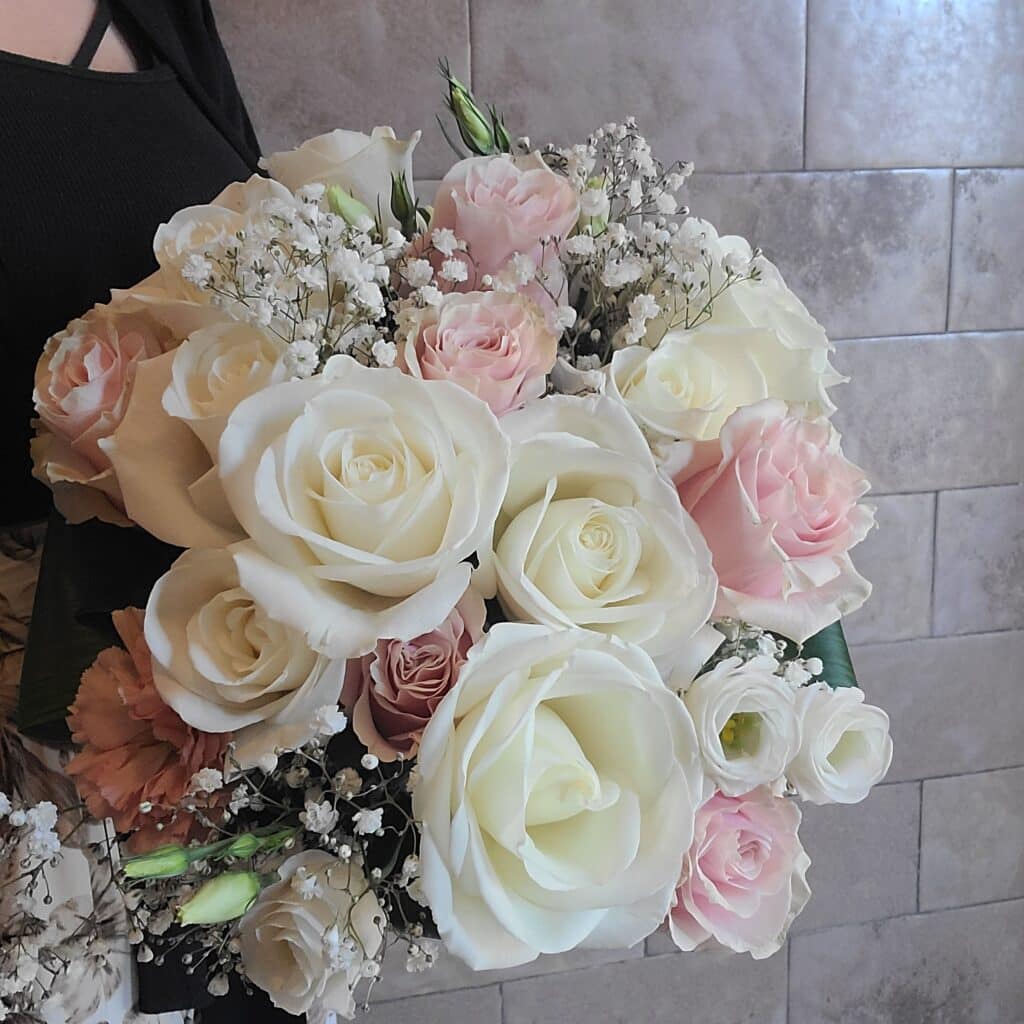
The bride carries the main bouquet.
It is the largest floral piece of the day. Because of that, it often sets the tone for the full design.
The colors, shapes, and textures used here usually repeat throughout the wedding.
In short, this bouquet leads everything else.
Bridesmaids
Bridesmaids carry smaller bouquets.
These designs should connect to the bride’s bouquet. At the same time, they are often simpler in size and detail.
This keeps the focus on the bride while still creating balance in photos.
Maid or Matron of Honor
The maid of honor bouquet is often slightly fuller than the other bridesmaids’.
The difference is subtle. Still, it helps show her role.
Even so, it should support the bride rather than compete with her.
The Groom
The groom wears a boutonniere.
This piece usually reflects the bridal bouquet. Often, it includes one bloom or a tight cluster of flowers.
Since it sits on the lapel, scale is important. Clean, structured designs tend to photograph best.

Groomsmen
Groomsmen also wear boutonnieres.
Their designs usually match the groom’s style. However, they are often slightly simpler.
When these pieces align, group photos look cohesive and sharp.
Parents and Grandparents
Mothers and Grandmothers often wear corsages, or posies for a modern twist. Fathers and grandfathers wear boutonnieres.
These pieces are small, yet meaningful. They honor family without drawing too much attention.
If you prefer a modern look, you can skip corsages. Instead some couples choose no wearable flowers at all.
Flower Girl and Ring Bearer
For younger attendants, scale matters even more.
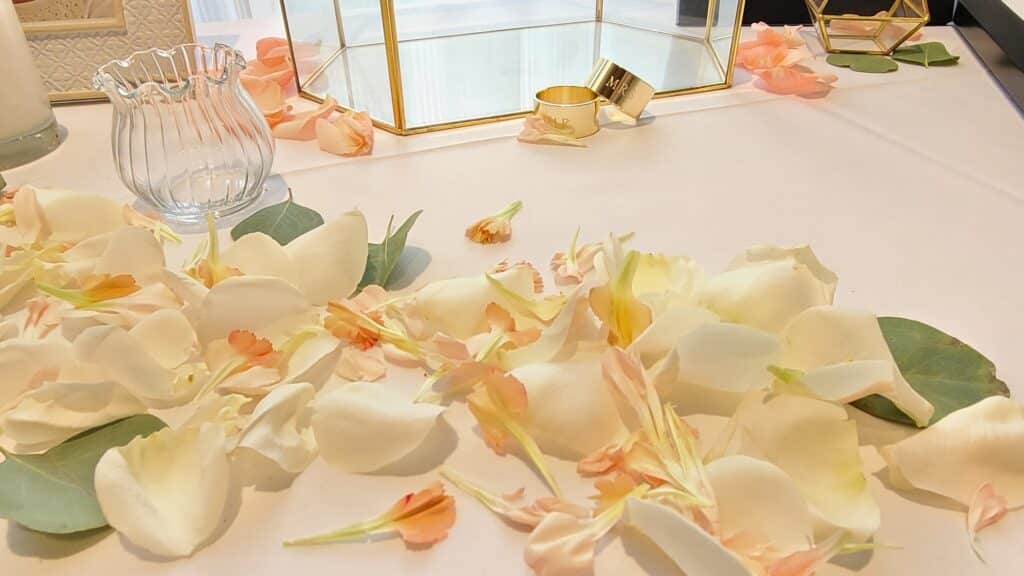
Flower girls may carry a small bouquet, loose petals, or a floral crown. Meanwhile, ring bearers sometimes wear a boutonniere.
Above all, these pieces should feel light and easy to wear.
Couples who feel this is over the top, skip these flowers as well.
Do You Have to Give Everyone Flowers?
No.
Bridal party flowers are traditional, but they are not required.
Some couples focus only on bouquets. Others remove wearable flowers entirely.
If photography is a priority, coordinated pieces help create a unified look. On the other hand, if budget matters more, simplicity adds elegance, it doesn’t take it away.
A Final Note on Cohesion
Finally, personal flowers connect the wedding party visually.
They create unity. They add texture. Most importantly, they support the atmosphere of the day.
When thoughtfully designed, each piece relates in scale, color, and movement. As a result, the overall look feels intentional rather than assembled.
And that is what makes everything feel complete.
If you need more guidance on essential wedding flowers , we’ve got you covered.
Likewise, see our complete guide for Montreal wedding flowers for all your questions.